“Burn down your cities and leave our farms, and your cities will spring up again as if by magic; but destroy our farms and the grass will grow in the streets of every city in the country.” William Jennings Bryan

Tuesday, April 20, 2021

April 20, 2021


Earth Day!

I took this shot last Sunday. The eagle was sitting in an oak tree at the side of a field, waiting I think, for prey. In NJ, bald eagles are making a comeback. Due to DDT and habitat loss, there was only one known active nest in the state as of the early ‘80s. Since then, with the disastrous environmental effects of DDT fading, biologists worked to reintroduce bald eagles and protect their nesting habitats. There are now 220 known active nests in the state, and at least one in each county, with most being in the southern counties.

I remember the times when there were no bald eagles to be seen. Now, I see at least one, two, or more on most days spring through fall, perched somewhere or floating high above on thermals. I don’t always get a chance to take a photo - that is still a very exciting and special occasion for me. (Admittedly, I sometimes still succumb to 'camera shake' because of the excitement.)

With all the saddening news about climate change and the destruction of natural areas, especially with the recent openings of so many of our national lands for profit, its uplifting to see a bald eagle, and to know that their story is a good one that continues to get better.

Friday, April 16, 2021

April 16, 2021


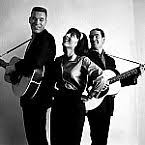
Rooftop Singers

 Lately I have been listening to “oldies”.  The songs I have been finding reach back over my life, from just a few years ago all the way back to my early childhood. One of the first songs that I can remember is “Walk Right In”, sung by the Rooftop Singers, and popular on the radio in 1962. Another is “Sugar Shack”, sung by Jimmy Gilmore and the Fireballs which was popular in 1963. Both these songs bring back some of my earliest memories.

One of those memories is playing “Tarzan” with my brothers and older sister. My memory is that, only wearing our tightey- whitey underwear, we were climbing around on our bunk beds making jungle noises. My sister was Jane, my older brother Tarzan, my younger brother “Cheeta”, and I was “Boy”.  This was while we were living in Oakridge, Oregon, and a time of my earliest memories – an oak tree in the back yard, Sammy our cocker spaniel, a woman who netted and tagged birds, train tracks behind the house, seeing elk, taking walks with my mom, and the sight of Mt. Bachelor in the hazy distance.

It’s amazing how a song can bring out these snapshots and memory movies that otherwise may have stayed tucked away somewhere in the subconscious. Research has found that music stimulates neural networks in our brains, including memory, emotion and creativity, which triggers autobiographical memories. Scientists have also found that in most cases, music tends to brings out the happier memories, whereas, photos, places or objects can bring out both good and “bad” memories. Listening to music, or a song, can help us see the brighter times in our lives.

Because oldies tend to bring back good memories, they can also cause us temporary feelings of melancholy because we know we can’t go back and have that time again. Sometimes I think to myself, wouldn’t it be great to play Tarzan again? To be with my sister and brothers in that very simple, innocent time before life spun us in different directions and into our very different lives? The good that we feel produces a feeling of longing, and different temperatures of emotions which overlap between the now and the then. It’s not such a bad thing. That bit of longing can bring us into a deeper, more meaningful state, as we revisit different parts of our lives.

It seems that with the pandemic, I have had more time to slow down. With this, I have given myself the time to let myself remember. It’s good to look back. It’s good for all of us. And so is listening to all the songs that bring out those good memories.

Saturday, March 13, 2021

March 13, 2021


I often wonder how we would think of certain plants if the word “weed” had never found its way into our vocabulary. The word, mostly due to saturation marketing, unfairly and too broadly labels many plants as “bad”. 

It is true that some plants can become nuisances, invasive, and disruptive to local ecosystems. Yet, most plants that have been tagged as weeds serve great purposes, such as preventing erosion, building the soil, and supporting animal and insect populations.  Many are wildflowers that are never appreciated for their simple beauty or importance to the surrounding biological community.

I am fortunate to live on this small farm that is not governed by rules or norms – neither legal or social – that require me to keep a perfect sward of grass. Well-kept yards are important in that they prevent erosion and provide valuable green space, yet due to the many unnatural inputs to maintain them as mono stands, they do not support other life, and if let go, cannot even support themselves for long.

I am all for diversity and the lack of uniformity that comes from encouraging different plant communities to thrive throughout my lawn and fields. I like how these areas change through the seasons, always providing new wonders. I especially like observing the succession of dominating plants through the changing seasons, and how they come to support so many different insects and animals.  It is so much more fascinating and rewarding to experience all these things than it is to look out onto sea of green blandness that only supports a “keep off“ sign!

I am not against yards. I spent much of my career as a golf course superintendent creating and maintaining mono stands. At the same time, I was able to set aside unmaintained, natural areas. What I feel is that some balance at the least would be best – perhaps designating more areas that are not controlled by marketing, laws, and chemicals. Areas where nature can just be, and where we can learn to appreciate a world that most of us have never had the chance to know.

Photo:  Purple Dead Nettle, a “weed”, is actually an edible herb that has medicinal uses, and provides early spring nectar to native pollinators.