“Burn down your cities and leave our farms, and your cities will spring up again as if by magic; but destroy our farms and the grass will grow in the streets of every city in the country.” William Jennings Bryan

Friday, January 31, 2014

January 31, 2013


Lately I have been thinking  a lot about elephants.

A few months ago I read the book Topsy, written by Michael Daly, about the elephant that was wrongly put to death by electrocution at Coney Island, NY on January 4 1903, under the supervision of Thomas Edison. The event was filmed by Edison’s film crew and if you are not faint hearted, you can watch the grainy short film on YouTube or on many other internet sites. It’s not pretty. Topsy burns and smokes from the feet up, and then topples over. Dead.

The book tells the story of an innocent Topsy, who was a victim caught between two unfolding events – the competition between the two top circuses of the time, the Forepaugh Circus and P.T. Barnum shows, and the bitter and complex battle over the merits and usefulness of AC vs. DC currents waged between Edison and Westinghouse. Throughout the book, Daly describes the history of the mistreatment and cruelty that elephants were subjected to throughout the era, and which still continues today. Topsy was only one of many elephants that suffered a lifetime of abuse.  Her life as a circus attraction began after she was stolen from her mother before she was weaned, and shipped off to America where she was beaten by trainers, bull hooked, and kept in chains. She was never allowed to be the elephant that her instincts told her to be. That too, was beaten out of her. During one beating, her tail was broken, and since then, it hung crooked.

She killed her first human, a drunk who sneaked into the menagerie tent where she was chained, and continuously teased her and then burned her sensitive trunk with a cigar. Defending herself, she picked him up with her scorched trunk and threw him to the ground, breaking pretty much every bone in his body.

Later she was sold to operators of an amusement park in Coney Island and after continually being mistreated by her handler – who was arrested for his abusive actions – she acted out her built up anxieties through actions that did not hurt anyone, but caused the area’s inhabitants to fear her. It was decided that she be put down. Until the fledgling SPCA stepped in, Topsy’s owners were organizing plans to make her execution a ticket selling, money making show. Although the SPCA said no to the “show”, they did not say no to the execution. Edison decided that this was another chance to prove that DC current could be lethally dangerous and he arranged her death by electrocution to prove his point even once more. This was after he had invented the electric chair to prove his point years before, and which was developed and improved by experimenting with electrocuting dogs and horses. He filmed the Topsy event just to be sure the world would again see that Westinghouse was wrong about the safety of DC current.

Topsy, for her entire life, was a victim.

But she was not the only one. Most elephants were treated the same as Topsy, and as they grew older and anxious of the beatings and the strains of captivity, became harder to handle and tended to defend themselves by sometimes hurting or killing their abusive handlers. Many were sold off, and inevitably, put to death.

Another book I recently read, Behemoth- The History of the Elephant in America by Ronald Tobia, as its title suggests, tells the history of elephants in this country, beginning with the first known elephant which arrived in America in 1796. The second, Old Bet, came in 1804, and was killed in Maine by a man named Daniel Davis who was “morally outraged” that her owner, in showing her, “took money from those who could not afford it.” In 1822, another elephant, Little Bet, was shot and killed by six boys in Rhode Island, wanting to disprove the elephant’s owner’s claim that a bullet would not penetrate the pachyderm’s skin. One bullet found her eye socket and a straight path to her brain. I myself would have to guess that her death didn’t prove a thing, as the bullet that killed her did not go through her hide.

One story from the book bothers me the most. It is of Mary, who was hanged in 1916. She killed an inexperienced handler, who she wasn’t familiar with, and who poked her behind the ear with a bull hook during a circus parade in Kingsport, Tennessee. She turned on him, killing him. She was charged with murder and was hung by a railroad crane – twice, because the chain around her neck broke during the first attempt, sending her crashing to the ground and breaking her pelvis…so they re-chained her and were successful the second try. She had been a part of the circus for years and years without incident, but for this one moment which was simply an attempt to defend herself from harm.

The stories of mistreatment go on and on. Not too many end happily.

Normally, when we think of animal mistreatment, we conditionally think of dogs and cats. The reality is that they are far from being the only ones. We as humans do not have a history of treating animals well, or in most cases, as living beings. Besides neglect and violence, take a moment to think about the chickens jammed in battery cages, cows in feedlots, baby bulls in veal sheds, horses slaughtered, goats maimed for military medic training, rabbits blinded for product testing, whales speared for their fat…also think of the amount of habitat we have taken or altered, forcing species to extinction. That too is abuse. As humans, we show little value for the lives of the weakest and smallest animals, but as these books point out, we also have a poor record as to how we treat the biggest land mammal, as well as all of those that fit in between.

I never had given much thought to animal cruelty as I was never exposed to it. Our family always had cats and dogs that, at least I think, were treated well. Our dogs slept on the couch, our cats were free to come and go, and all were fed and loved and never missed an appointment with a vet. My first cat, Hooter, was hit by a car and by the time the surgery bills were over, Kath and I were broke and wondering how the mortgage would be paid…for a few bucks we could have just said goodbye to him then, but it turned out we had another great ten years with the guy who finally and sadly died of cancer. To me, and Kath, that’s just what you did. We never thought to think another way. I think that most everyone is the same way, or at least that is the kind of dedication I have witnessed from the people I know.

What turned the light on for me to begin to understand how bigger animals were treated began when we first got into horses. I was naive and only thought that like most dogs, a horse was purchased and cared for by its owner until death parted them …But I found that was not really the norm, as horses are bought and sold like stocks, and when they don’t perform to an owners expectations, most are sold off. Many have multiple owners who treat and train them with different methods ranging from trust to force. Some owners take better care of them than others do. When a horse can no longer be used or sold for some type of use, whether it be for riding, racing, or showing, or because it has been mistreated to the point it cannot be handled safely, the chances that it will be sold to an auction house to be bid on for slaughter is common. My horse Lou was headed down that path years ago.

Like animal shelters that are operated for the care of unwanted cats and dogs, there are horse rescues and organizations that work to care for retired horses and/or to retrain and adopt out horses for new careers or as companion animals. Many of these organizations retrain racehorses whose racing careers are over and find them new homes. Not all horses are lucky enough to be rescued by any one of these organizations, and are last seen on the auction floor. There are many race horses that have made their owners hundreds of thousands of dollars and end up on dinner plates in European countries. To some, it’s considered part of the business.

Some aspects of the horse business is not much different than the elephant business, and I think that is why it has moved me to learn more about both situations and to try to help by supporting rescues when I can. Luckily, there are two well known and very respected organizations in the United States that rescue elephants – PAWS (Performing Animal Welfare Sanctuary) in California,  http://www.pawsweb.org/ ,and the Elephant Sanctuary in Hohenwald Tennessee, http://www.elephants.com/aboutSanctuary.php

On both sites, particularly on the Elephant Sanctuary in Hohenwald Tennessee, there are the stories of each of the elephants that are there. Some of these stories are very disturbing, especially if you take the time to do a little further research on your own with an internet search of any of these neglected souls.

As for horses, there are so many rescues out there that they are easily found. One in particular that Kath and I have been supporting is the Standardbred Retirement Foundation , http://www.adoptahorse.org/  which is dedicated to retraining and finding homes for standardbred horses who no longer harness race due to age, injury, or lack of winnings. They have saved many of theses animals from slaughter. We were drawn to this organization because of Lou’s past as a harness race horse (aka Earls Lucky Buck) who didn’t fare too well on the track. We don’t even think he got there.

(Just so you know that we care about other animals as well, our three cats are rescues from the Ocean City Animal Shelter, and we have a domesticated duck that a friend of Kath’s found and brought to us. In the past, we also had a rescued chicken! Our little goat  gal Ellen was slated to be someone’s Easter Dinner last year, but we bought her a week or so before she was be sent to an auction in Lancaster.)

But the elephant thing is really something that I had never known anything about, and I ask everyone, not necessarily to be an activist, but to take a few minutes to learn about their plight. It is really sad, and because they aren’t as mainstream as dogs, cats, or horses, little attention is given to them. I think if their stories were more publicized, the ways in which they are treated could change for the better.

Tuesday, January 14, 2014

January 14, 2014


Monday was an interesting day…just one of those days…and I had my camera along with me.

 ***


There is a saying about goats and fencing that goes “if the fence can’t hold water, it can’t hold a goat.” Ellen set out to prove that to me a day ago. She pushed herself under the back pasture fencing and into my garden. No big deal I thought; I would just fix the fence and be done with it. I re-stretched and re-stapled the fence to the posts so that it wouldn’t bow out at the bottom, assuming that would stop her from squeezing underneath to her new found “freedom”, or at least to the garden and the garden goodies. Needless to say, my repairs didn’t hold water…er, I mean Ellen. After I was finished, I put the goats back out in the back pasture and got busy doing something else. The next time I looked up I could only see three goats in the back pasture – Frances, Irene, and Mary. I looked over into the garden and there was Ellen, happily nibbling away at the strawberries! I was so impressed that she had found her way out again that I let her nibble her prize for a bit longer before going in and getting her. So now it’s back to the drawing board for me - how to design a fence that can hold water.

***


While I was watching Ellen nibbling away at the strawberry patch, I turned back to look at the other goats and Frances began playing hide and seek with me. She was literally trying to hide herself behind the old standpipe in the back pasture, and peek round it to see if I could see her. I know you don’t believe me, but to be honest, goats do these kinds of things. They can be pretty playful and pretty funny. Get a few of your own and see for yourself! You’ll realize pretty fast that I am not making this up.

***


Later on I inadvertently left Paddie Pant’s (Patrick) stall door unlatched. When he came in from the paddock he gave the sliding door a nudge and it slid open much to his delight. At the time, I was slowly making my way back to the stable, struggling through the thick mud in the paddock and so I had no chance of getting to him fast enough to catch him. I watched him though the stable windows as he trotted down the midway and out the back stable door that opens to the back field. Once outside the door, he made a quick left and shimmied himself through the walk -in door to the chicken coop. The gals who were inside roosting were caught unawares and began scattering out, clucking loudly with their wings flapping wildly. Pat calmly and happily began eating whatever chicken feed he could find. So, now I had an 1100 lb horse in the chicken coop to deal with The thing is, Paddie Pants is way too big for the door and the chicken coop – and it’s a pain to squeeze him out of there. But with a little patience I did.  He had had his fun, and seemed all proud of himself and content with his little adventure.

Tuesday, December 17, 2013

December 17, 2013


I say “Happy Holidays”.

This time of year there are many celebrations and I don’t feel threatened or see it as  politically correct, or politically incorrect, to be inclusive. To be exclusive and only acknowledge one holiday at this time of year doesn’t seem to follow the theme of loving others. This is the time of season to celebrate our diversity and rest our prejudices. Prejudice is not necessarily a problem of race or lifestyle, but also of faith. At a time of peace, joy to the world, and good will towards others, let’s not passively say it, but truely practice it.

I think my friend Karen said it best – to paraphrase her, “I will say Merry Christmas on Christmas Day, Happy Chanukah on Chanukah, and recognize each celebration on their respective day, but I still say Happy Holidays throughout the season. Happy Holidays is inclusive.” 

I agree. It is the holiday season, and I want to recognize and celebrate all our differences just as much as I want to celebrate my faith, for that is what my faith leads me to do, and what I believe my faith is about.

Monday, October 21, 2013

October 21, 2013


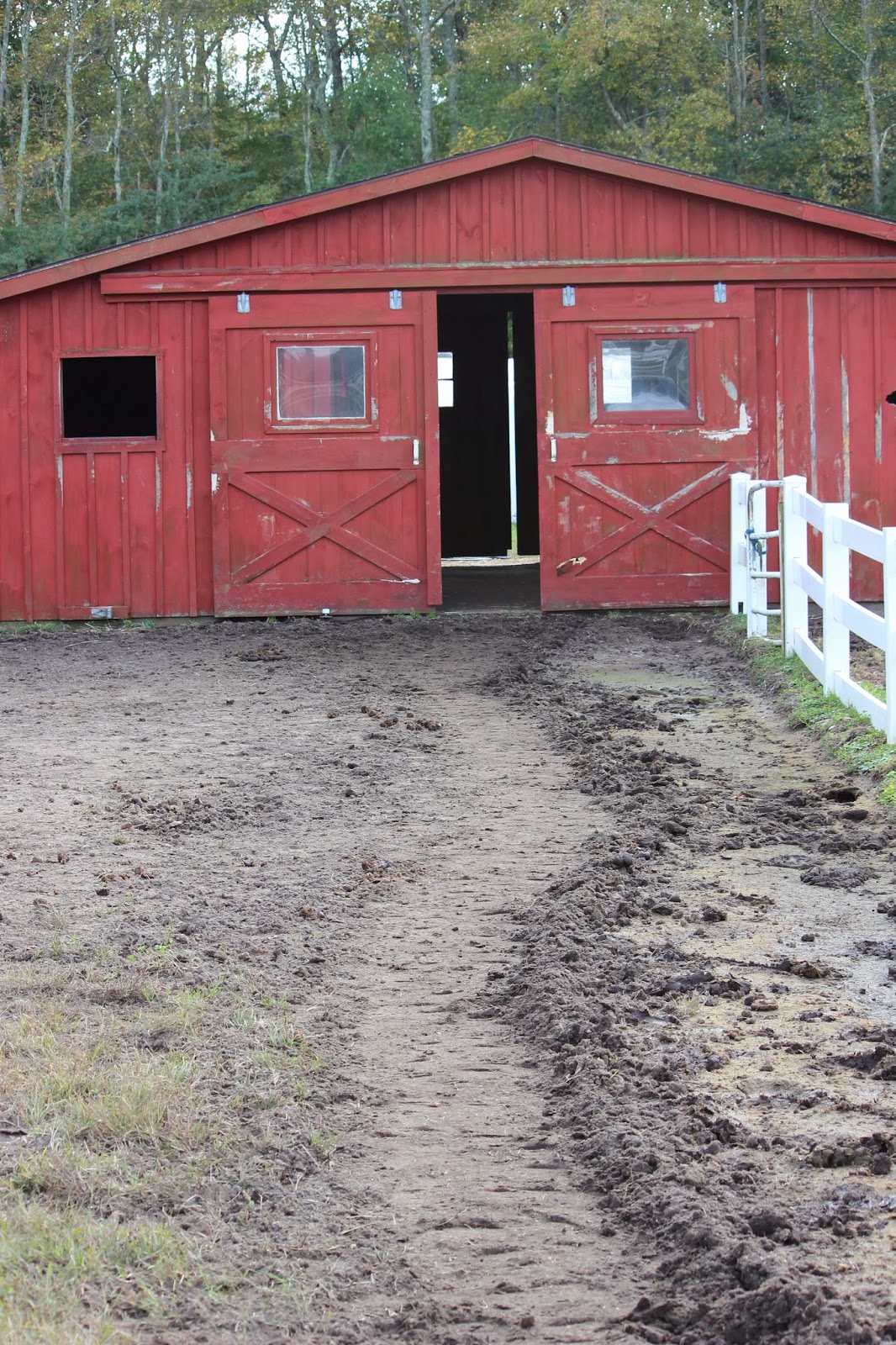
We call it Louie’s worry path. It’s a short path along the paddock fence that runs between the pasture fence and the stable. Louie has made and remade the path over and over again hundreds of times, whether the ground has been muddy, dry, or covered in snow. Sometimes the path is parallel with the paddock fence, while other times it slightly curves along the firmer, drier shores around rain softened ground.  I don’t recall any time that some form of the path has not existed. Or that I have seen a day that Lou hasn’t walked or trotted it, gracefully pirouetting at each end and heading back the other way.

I am not so sure if it’s the right descriptive to call it his worry path, but we still do. Lou will walk or trot it when he’s excited to see us, anxiously waiting to be fed, or while playfully tossing his head at Zippy or Pat. My heart always lifts when I begin walking to the stable and suddenly Lou will turn from where he is nibbling grass in his paddock, and begin trotting the path with his tail flagging, and calling to me, happy that I am coming to see him….But there are times when he quietly and slowly trudges along his path with head down, as if he is in some deep train of thought or practicing some form of mindfulness, giving us reason to call it “Lou’s worry path.” Just like Pat waiting at the fence for one of us to kiss his nose, or Zippy sliding his bared teeth across his stable door bar to say “I’m here!” Lou’s path has become his brand, his trademark. It is a part of his personality, a part of his identity.

But lately Lou’s worry path has been ours.

Lou has given us a lot of worries this year. Losing his eye, contracting lymes disease and erchlichia, and then two weeks ago, he scared us with a bout of colic, which in a horse, can be fatal.

We recognized that Lou wasn’t feeling well right away and called the vet. She was on her way to another emergency colic about an hour away, and after she finished there (successfully!), she came out to see Lou. Lou had stopped eating and drinking, his breathe was heaving, his head hung low, and his eye had no sparkle... and the huge masses of muscle that hug his hips were sagging and too weak to hold him steady.

The vet worked on him for hours – working over his intestines, pumping his stomach out and pumping back in fluids and electrolytes, giving him antibiotics, and a good dose of banimine to soothe his pains. Lou was almost too weak to resist any treatments, but had a look of trust in his eye, and he let Kath and I hold him by his halter as he resigned to the tubes being pushed up through his nose and threaded down into to his stomach, the resulting nosebleed, and all the discomfort that must have been coursing throughout every part his body….

After all was done, and Lou was back in his stall, we all sank to the stable floor exhausted. The vet sat down a bit opposite of me and began writing up the records of what had just been done. I turned on my phone and started up Pandora. A song by the Fleet Foxes played and the vet looked up, recognizing the sound, and said it was one of her favorite songs. The moment brought us all to a sense of some normalcy…the tension lifted and each of us sighed.

It was a long night that night, walking out to the stable every few hours to check on Lou, knowing that we could as well find him on his feet as well as on the ground. Each walk to the stable was filled with hesitancy and hopefulness, yet each time, he was on his feet…

It took a couple of days of careful feeding and keeping him hydrated before he started coming around, and another week of slowly reintroducing him to his regular feed and pasture schedule before we really knew that he was, and would be, ok.

Once again, we dodged a bullet. The old guy came through…

I know that Louie has a guardian angel watching over him. Most times I think he has more than one, and they all walk with him on his worry path. It is a path we have all come to share –  the good and the bad. This morning he was standing still on his trodden piece of ground, napping peacefully, with the warm sunlight lying across his back…I felt grateful to have this day, having had another reminder not to take another day for granted.

Monday, September 30, 2013

September 30, 2013


Sometime in late June I stop mowing the small field behind the house and simply let nature take its course.

At first the grasses just grow high while the sedges surge even higher and tower like little skyscrapers over all else. Throughout July it ages and looks like a chaotic mess of weeds and bent over grasses, which would send most other people to the Home Depot for a cart full of tasty herbicides and a new riding mower. But I just let it go…

…and by September, as if it happened in a single moment, the field explodes in white with heath aster, a native, woody, wildflower. It grows not just in the field, but along the fence rows, the wood lines, and almost anywhere that isn’t kept mowed.

Its hard to track all the insects that I find on its flowers, or hiding in its canopy – grass hoppers, moths and butterflies, praying mantis, native bees including the mason and bumble bees, and its hugely popular with my honey bees. At times, the entire plant is softly shaking with the traffic of so many insects visiting it at one time. The other evening on one plant I stopped trying to count the honey bees that were flying from flower to flower as there were just too many.

As I had written last spring, I think that too many fields and wild areas are gone, cut down, or sprayed to death, and for those reasons there are not enough wild flowers to support healthy populations of honey bees, native pollinators, or the hundreds of other insect species that rely on pollen and/or nectar for food. I have to wonder where all these insects that are visiting these asters would go to feed or hunt if I had cut them all down to keep “appearances”. I think they just wouldn’t be, or at least, there wouldn’t be as many.

And then I wonder, how many more insects could be sustained if I had given my whole property over to nature? It comes down to the point that doing anything, even just a little, is better than doing nothing at all.


Sunday, September 8, 2013

September 8, 2013


Fall is coming…each morning as I walk out to the stable, I see that Orion has inched up over the eastern tree line just a bit more. The horses and goats are growing out thicker coats, getting ready for cooler days. Sour gums are showing small, hanging berries and red leaves, and the sassafras leaves are turning yellow at the lobes. Evening’s light is growing shorter, while the morning’s darkness lingers on long past my awakening.

I love this time of year. It’s all of subtle changes….and it brings sentimentality to the summers end and I think back…

A fallow year on the farm…Lou’s eye and Lymes disease…seven new chicks…harvesting honey…bluebirds and grackles…rain, and more rain…mud…digging potatoes…broken ribs…Martha.…strawberries…poison ivy and chiggers… baby sitting a friend’s chicken flock…pulling garlic…first time riding English style, leaving my western boots at home…Lou ambling over to hang his head on my shoulder, as close to a hug as can be…waiting for Cherokee Purples to ripen…discovering the Stable Song by Gregory Alan Isakov, a farmer/ musician…Zero 7…Margot….our vet, Tanya, coming to the barn at 11pm for Lou, more than once…Paddy waiting for me at the fence corner each morning…losing my religion…peas and eggplants out growing the hoop house…first summer without any kids at home…a rained out concert…letting the  back yard grow into a meadow…watching kids that visited touch a horses nose for the first time…Topsy…Zip running laps in the pasture, kicking his heels at the wind…friends who showed up just  when I needed to break out of my silence.

Overall, it was a good summer, but I am looking forward to fall’s slower pace and maybe, if I am lucky, napping in the hammock for an afternoon.